
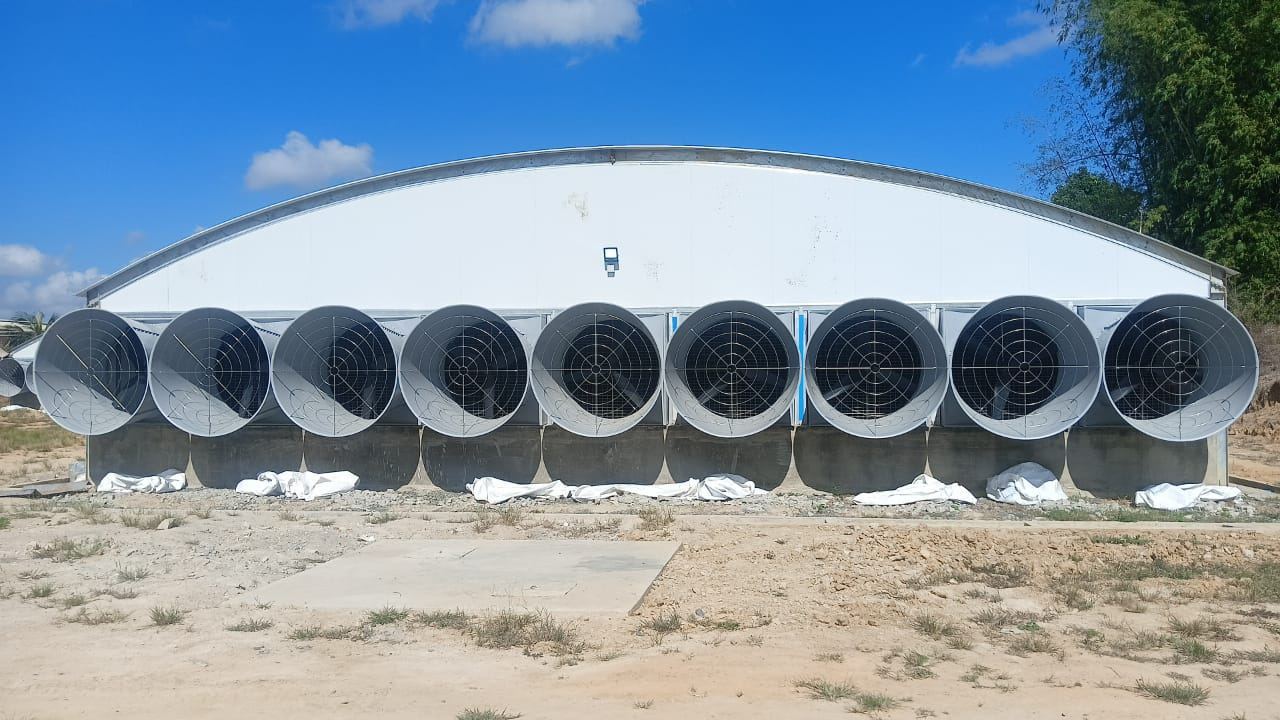
Tunnel ventilation for poultry houses in the Philippines
Fans, cooling pads, inlets, and controls engineered as one system for tropical heat and humidity, in new AFI houses and in the houses you already run.
Heat is the hardest thing a Philippine poultry house has to manage
Once the air over the birds is too warm, feed intake drops, growth slows, and mortality climbs, however good the rest of the house is. Tunnel ventilation draws outside air in through cooling pads at one end of the house and out through fans at the other, so air sweeps the full length of the house at speed. AFI designs fans, pads, inlets, insulation, and controls as one system, because each performs only as well as the others allow.
- Air moved along the whole house at a designed speed
- Cooling pads that run when outside conditions make them useful
- Inlets that seal for brooding and open fully for tunnel mode
- One controller running fans, pads, inlets, heating, and lights
One airflow, from pad wall to fan wall
- 1 Air in through the pads
Fans draw outside air through a wet pad wall.
- 2 Water takes the heat
Evaporation in the pad cools the incoming air.
- 3 Air sweeps the house
Air travels the full length at a designed speed.
- 4 Fans exhaust it
Variable-speed fans pull it out at the far end.
- 5 The controller decides
Staged by temperature, humidity, and bird age.
In humid air, air speed does the heavy lifting
In a 16 m floor house, the same fans that give about 2.5 m/s along the house with a sealed drop ceiling give about 1.8 m/s without it.
Rules of thumb from cooler, drier countries do not transfer. Philippine afternoons are hot and humid, and so are the nights.
Moving air carries heat off the birds, so a well-designed tunnel makes them feel several degrees cooler than the thermometer reads. Cooling pads cool the incoming air only part of the way towards the wet-bulb temperature: on a humid afternoon that gap is small, and the pads add moisture. So AFI designs for air speed first and pads second, and the controller runs the pads by outside humidity, temperature, and bird age.
Pressure matters as much as fan count. Pads, inlets, and cages all add resistance, and a fan moves less air the harder it pulls. AFI rates every fan at the house’s worst-case working pressure, not its catalogue figure.
Typical AFI design air speeds
Design targets vary with house width, ceiling, bird age, and cage system. Every house is engineered individually.
Every component, specified to work together
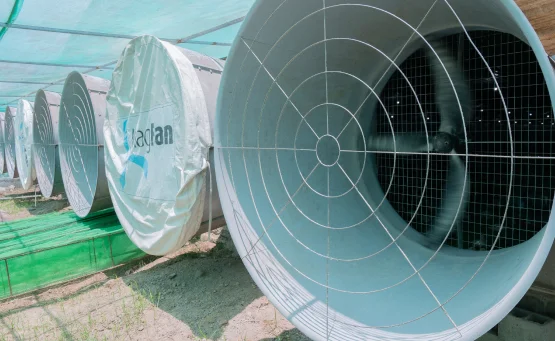
MagFan 3 for floor houses, MagFan 5 for cage houses
AFI is the Philippine dealer for DACS. The MagFan holds the record as the most efficient wall fan tested at BESS Lab, University of Illinois (2019), and AFI matches the model to the house: MagFan 3 for floor-kept birds, MagFan 5 for the higher static pressure of caged houses. In BESS Lab testing at 100 Pa, the MagFan 5 moved about 45% more air than the MagFan 3.
- Direct drive: no belts, pulleys, or tensioners to maintain
- Variable speed with a soft start: no start-up surge on generators
- Up to 70% lower energy use than conventional cone fans (DACS figure)
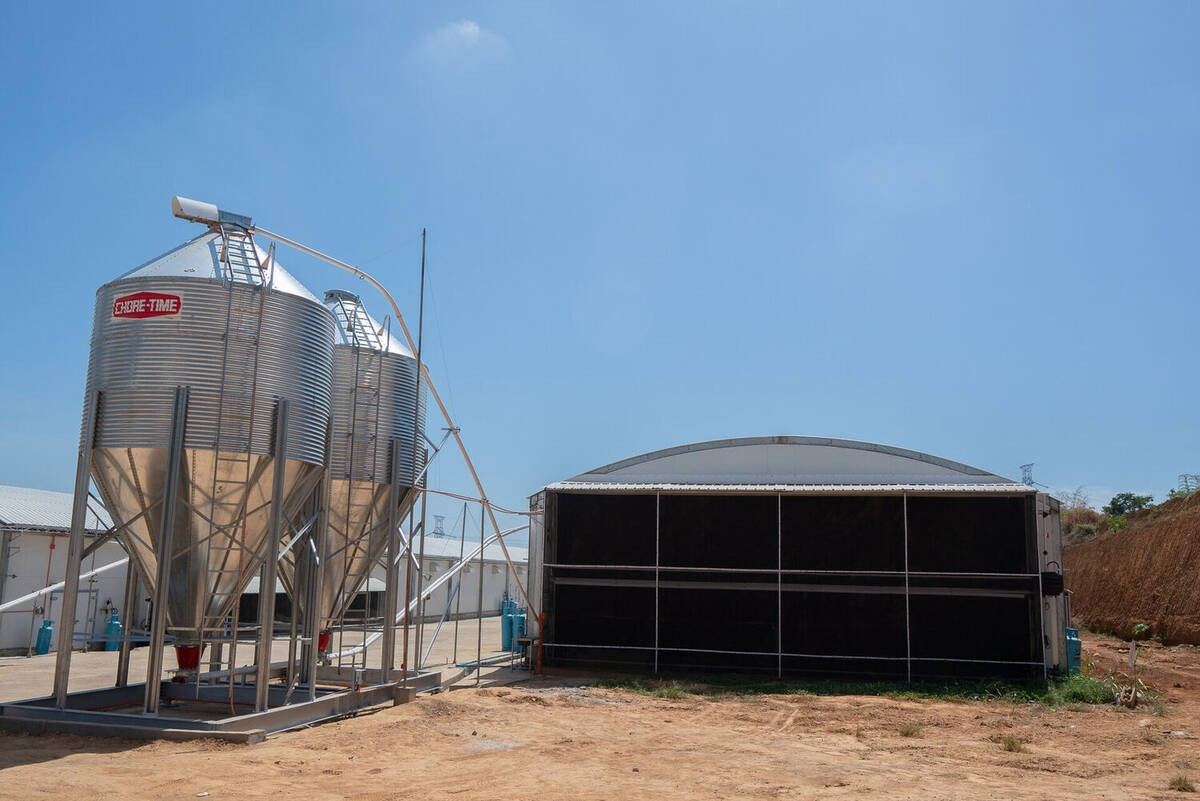
Cooling pad walls engineered to the fan package
AFI designs and supplies the cooling pad wall as part of the tunnel system: fluted cellulose pads for even wetting and low resistance to airflow. Pad wall area is engineered to the fan package and target tunnel speed, and delivered complete with frames, gutters, pumps, and the dog-house structure.
- 45°/15° flutes as the AFI standard: water is steered to the air-inlet face, so the pad washes itself
- 100 mm or 150 mm thick, chosen to suit the house and its fan package
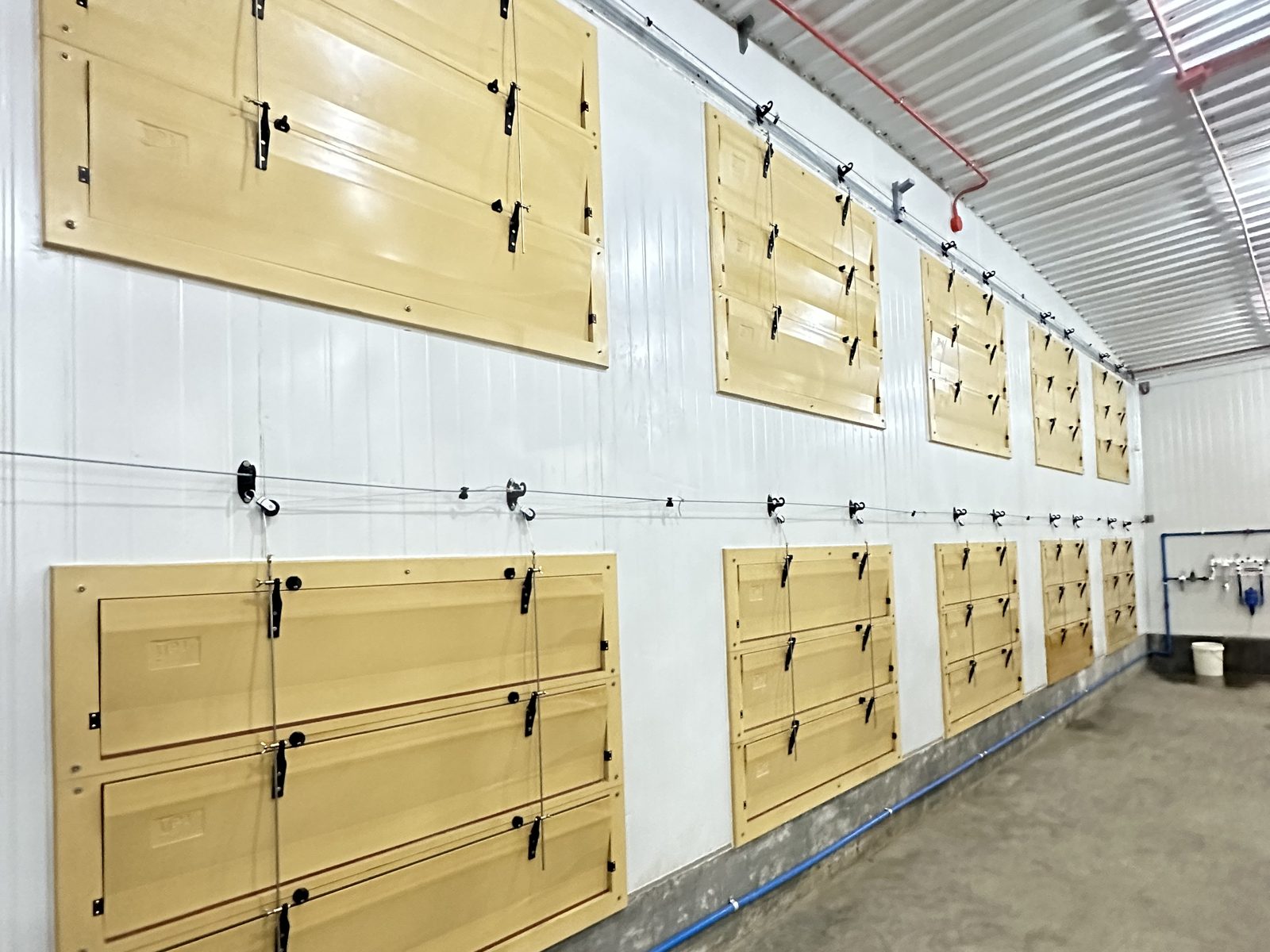
Tunnel doors or TPI tunnel units, matched to the house
The tunnel inlet must seal airtight for brooding and open fully in the hot season. On floor and elevated broiler houses, AFI’s default is the insulated tunnel door. On cage houses, floor-to-cage conversions, and AFI’s newest layer breeder houses, it is the TPI 6000 series tunnel unit: insulated valves that steer air upwards at small openings and open wide for tunnel mode.
- AFI is the TPI-Polytechniek dealer for the Philippines
- Units sized to the pad area and opened by motorised winch from the controller
- Designed to spread air evenly across the width of the house, including between cage rows
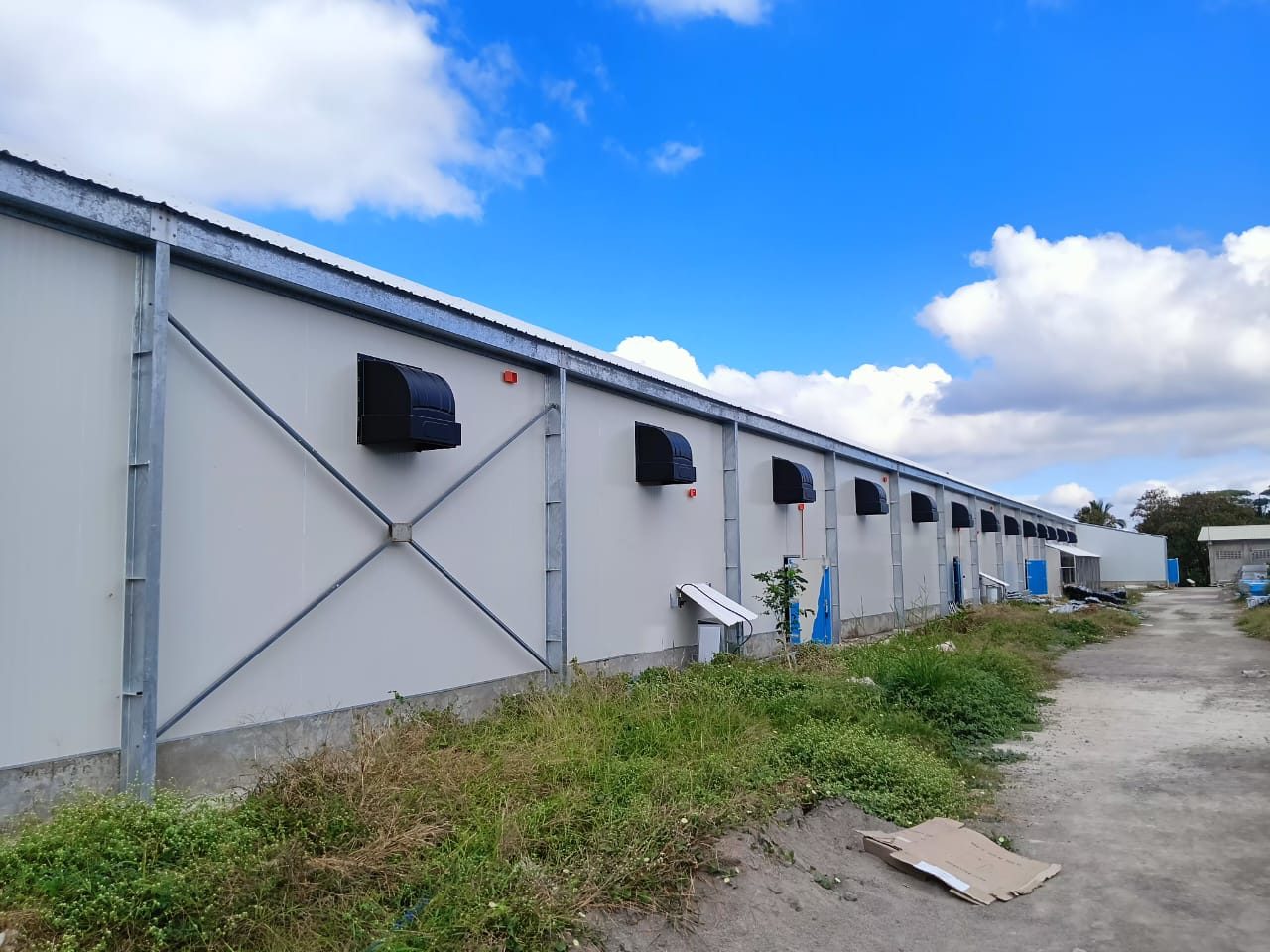
Fresh air without chilling young birds
Young birds need fresh air to keep the house dry and ammonia down, but not a draught. Side wall inlets send incoming air along the ceiling so it mixes before it reaches the birds. TPI Omniflux side wall inlets, with light traps and wind hoods, are standard on every AFI multi-tier house.
- Opened and closed by motorised winch from the controller
- Inlet openings sized on the fans’ running airflow, then checked with smoke
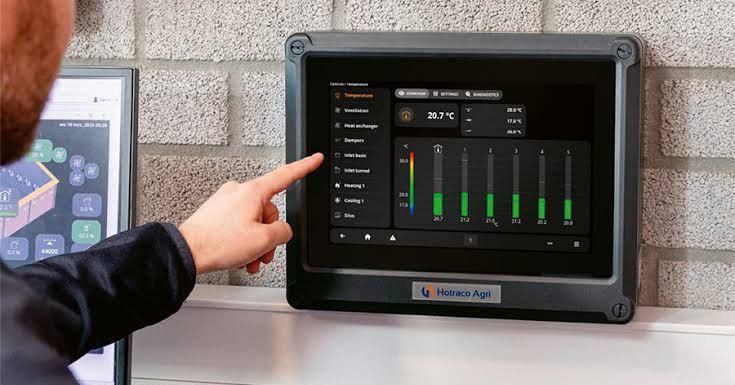
One controller for the whole house
Fans, pads, inlets, heating, and lights are staged from one controller that follows the flock’s day table. AFI specifies controllers that show why pads or tunnel mode are blocked, alarm when a sensor fails, and reach your phone.
- Hotraco Fortica control, with multi-house management on Fortus
- Chore-Time Catalyst controllers on AFI broiler houses, Chore-Tronics 3 on breeder houses
Four things that make or break a tunnel house
An airtight, insulated envelope
Leaks short-circuit the inlets. AFI seals and insulates every house, typically with AgriSHIELD cellulose made by sister company IFI.
Fans rated at real pressure
Catalogue ratings can leave a house short of design air speed. AFI rates fans at the house’s worst-case pressure.
Air speed measured, not assumed
Design air speed is a number you can check with an anemometer, end to end, every flock.
Power that keeps the fans running
In a full house, a fan failure is an emergency measured in minutes. Standby power and alarms are designed in.
Upgrading a house that runs hot
Many farms run houses built for smaller birds or older equipment. AFI upgrades ventilation in existing houses, including houses AFI did not build, across the major equipment brands.
Converting a floor house to cages? The airflow has to be re-engineered for the cages, with tunnel units in place of doors. See multi-tier broiler systems.
- 1 Measure air speed along the house and pressure at the fans
- 2 Inspect the envelope, fans, pads, inlets, and controller
- 3 Fix the weakest link first: fans, pads, inlets, controls, or leaks
- 4 Commission, then put the house on a maintenance programme
Engineered into AFI poultry housing
Floor broiler
MagFan tunnel ventilation and full climate management.
Multi-tier broiler
MagFan, TPI inlets and tunnel units, Hotraco control.
Elevated broiler
Airflow designed around the raised floor and the manure area beneath it.
Breeder
Gentle at brooding, full tunnel at peak lay.
Layer
MagFan 5 for caged houses, with TPI inlets.
Installed by AFI crews, supported long after handover
AFI crews install, test, and commission every ventilation system with the rest of the house. Preventive maintenance, breakdown response, and spare parts stocked in our own facilities keep it running.
- A spare parts kit delivered with every new house
- Performance inspections and ventilation tuning
Tunnel ventilation questions
What is tunnel ventilation in a poultry house?
Tunnel ventilation draws outside air in at one end of a closed house, usually through cooling pads, and exhausts it with fans at the other, so air moves along the whole house at a designed speed and cools the birds.
Do cooling pads work in Philippine humidity?
Yes, but less on humid days, when they cool the air less and add moisture. AFI designs for air speed first and runs the pads by outside humidity, temperature, and bird age.
What air speed should a tunnel-ventilated broiler house have?
Typical AFI design targets are 2.5 to 4.0 m/s in a floor house, 2.0 to 3.0 m/s in an elevated house, and about 3.5 m/s in the corridors and 1.5 m/s at the cage centre in a multi-tier house. The right figure is set at design stage.
Can you upgrade the ventilation in an existing house?
Yes, including houses built by other contractors. We measure air speed and pressure first, then fix the weakest link: fans, pads, inlets, controls, or leaks.
Do you service ventilation systems you did not install?
Yes. AFI services equipment from other suppliers across the major poultry equipment brands, from preventive maintenance to breakdown repairs.
Planning a new house, or fixing one that runs hot?
Tell us the house size, bird type, and what you see in the hot season. Our team will scope a ventilation system built around it.
Request a quote