
Build up, not out.
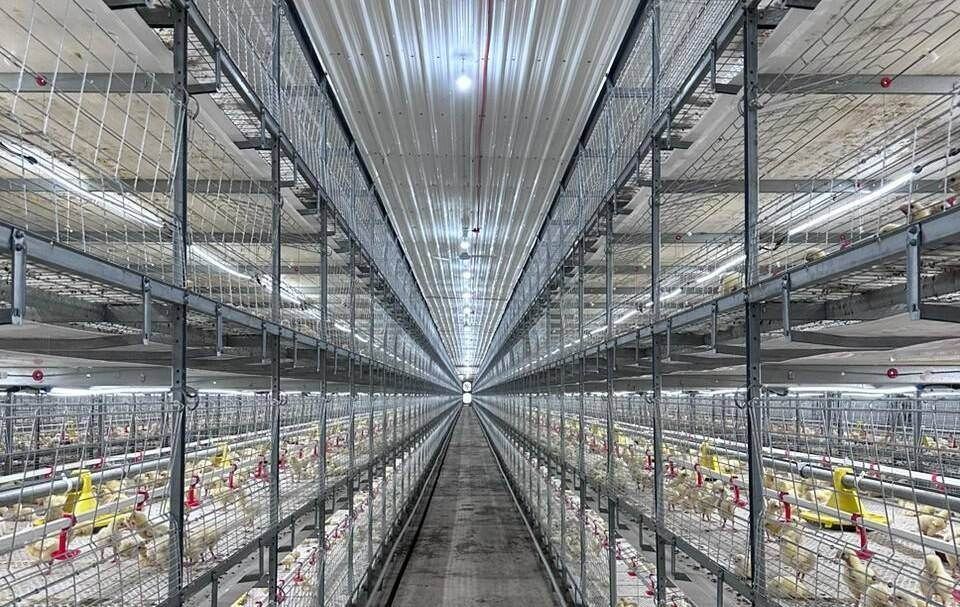
Multi-tier broiler systems turn a fixed footprint into intensive commercial output, engineering buildings, VALLI cage systems, equipment, and climate control into one high-density facility.
Maximum production from the land you have
Multi-tier is the most advanced broiler format in the market, and AFI has delivered over 50 multi-tier installations in the Philippines. By stacking production vertically and automating feeding, drinking, harvesting, and manure removal, a multi-tier house produces more birds, more often, at a lower cost per bird than conventional housing.
- Over 50 multi-tier installations delivered nationwide
- Typically 8 to 9 cycles per year against 6 to 7 on the floor
- Around 30% less energy per kilogram of bird than floor systems
- Engineered and delivered as one integrated facility
The commercial case
More flocks per year
Typically 8 to 9 grow cycles per year in cage systems against 6 to 7 on the floor. Automated harvesting and routine manure removal cut days out of every cycle.
Lower energy per bird
Around 30% less energy consumption per kilogram of bird compared with floor systems, with better feed conversion on top.
More output from less land
Stacked production levels put far more birds on the same footprint. When land is the constraint, multi-tier is the answer.
Better uniformity
Smaller colonies with optimised feed and water access grow more evenly, cycle after cycle.
Every layer engineered to work together
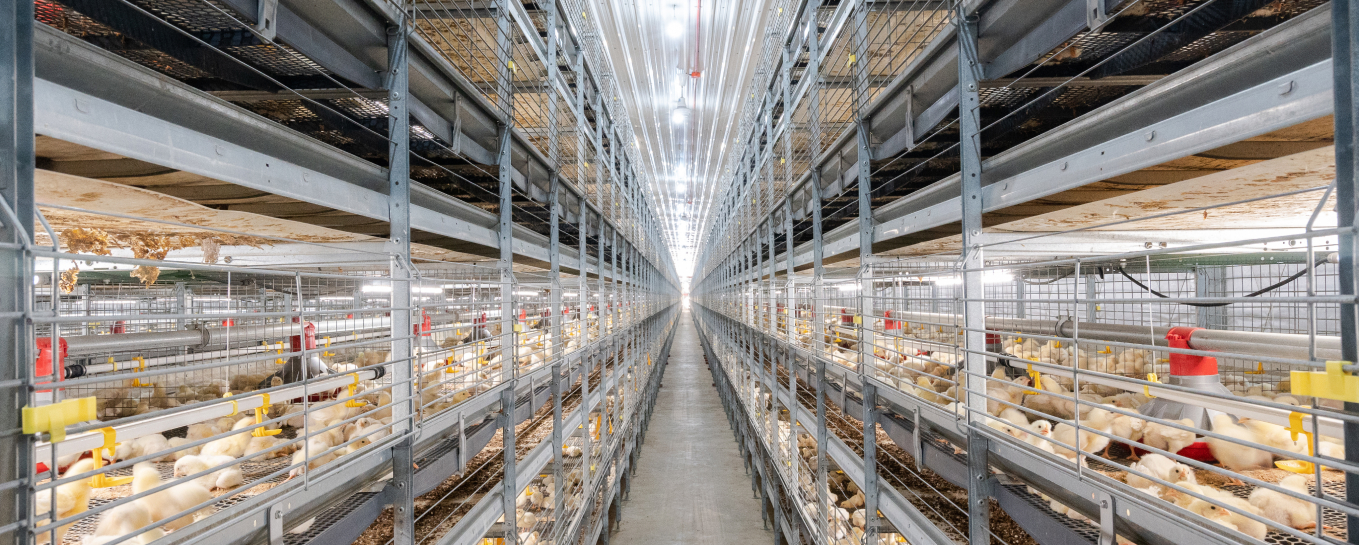
VALLI Broiler Best multi-tier cages
The VALLI Broiler Best system supports optimal hygiene for better bird health and lower mortality, with a simple, robust design built for intensive commercial use.
- Nearly 4.5 square metres of floor space per cage with honeycomb mesh plastic flooring
- Sturdy construction with a high standard of materials and galvanisation
- Wide sliding doors for easy chick loading and colony access
- Wire partitions that improve ventilation, heating, and lighting
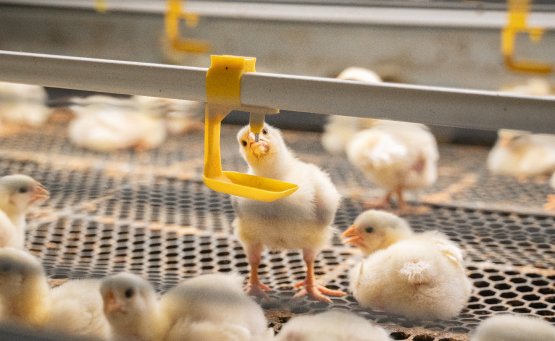
- Height-adjustable automatic pan feeding and drinking on every tier
Automated collection and conveyors
Automated harvesting cuts harvest time by 65 to 75% on average. Birds travel by lift and conveyor to a single collection point for fast, efficient, and safe harvesting, while manure belts remove waste routinely.
- Total cycle time typically 40 to 42 days including cleanup, against 50 to 55 or more on the floor
- Routine manure removal cuts cleanup by 2 to 3 days per cycle
- No slats to remove, clean, and disinfect, saving another 3 to 5 days
- Far less labour required across the whole cycle
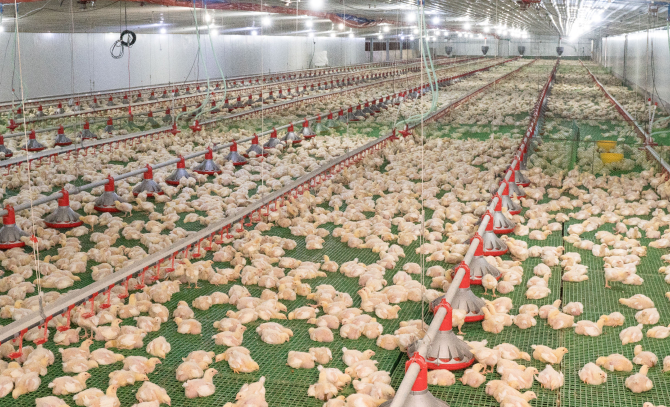
A building designed for multi-tier
Multi-tier houses place different demands on the structure and airflow. AFI adapts its prefabricated building system specifically for caged systems, keeping costs down while improving performance.
- Modified airflow design with insulation placed between roof and ceiling panels
- Smooth walls and ceiling with no airflow impediments
- Engineered for the higher static pressure caused by cage and manure systems
- Clear-span widths up to 18 m and lengths up to 174 m
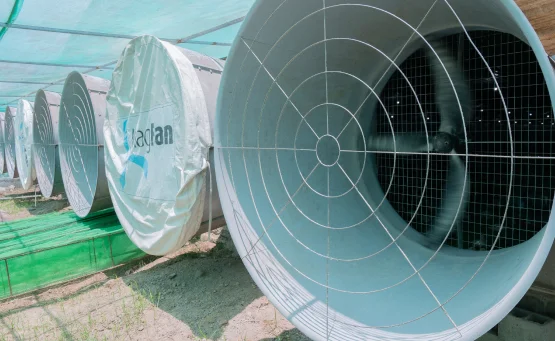
Ventilation and climate control
Uniform conditions across every tier are what make multi-tier work. DACS MagFan fans move the air, TPI inlets bring it in and direct it, and Hotraco controllers hold the whole house stable, top tier to bottom.
- MagFan: record-holding efficiency, tested at BESS Lab, University of Illinois
- Variable speed fans that adapt continuously to in-house conditions
- Evaporative cooling, heating, and automated curtains integrated under one controller
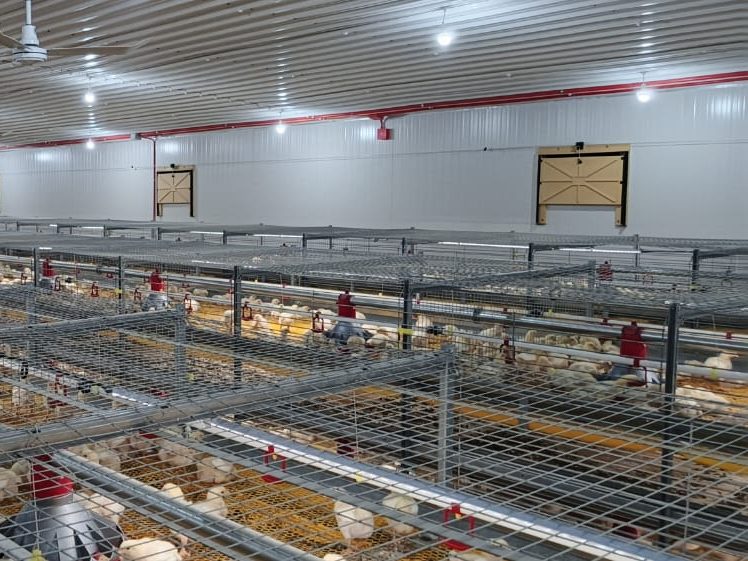
Fresh air in, at the right speed and direction
Every AFI multi-tier house is fitted with TPI Omniflux side wall inlets as standard. Air speed and direction are set independently at each inlet, so incoming air can be directed along the ceiling and mixed before it reaches the birds on every tier.
- Four adjustable louvres set the air direction; a sliding plate sets the opening and air speed
- Light traps on every inlet, with wind hoods outside to keep gusts off the inlets
- Opened and closed by motorised winch from the Hotraco controller
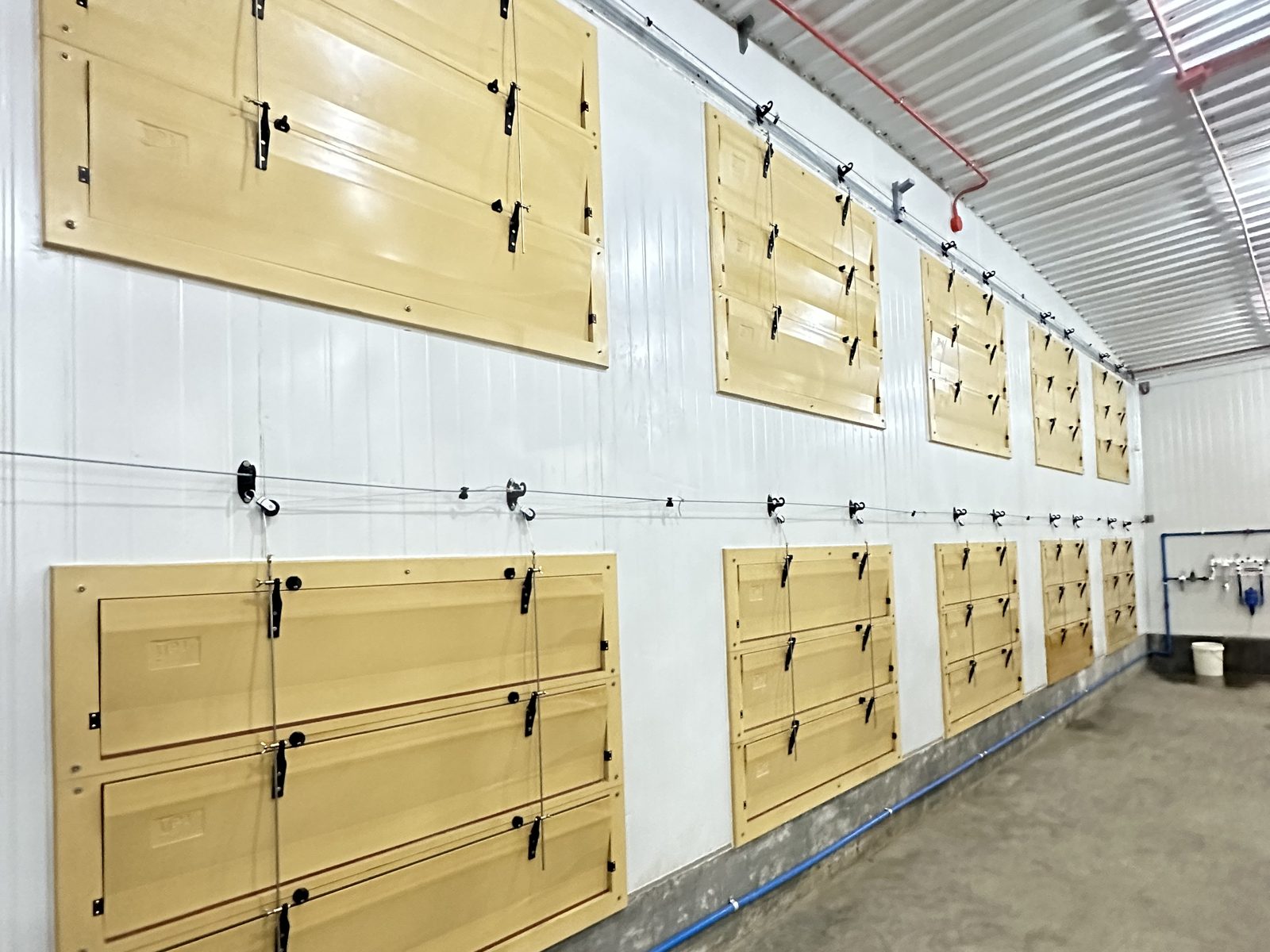
Insulated tunnel units at every cooling pad
Stacked TPI 6000 series tunnel units close the cooling pad openings during brooding and open fully for tunnel ventilation in the hot season. Built in insulated polyurethane, they keep the envelope warm when closed and let the full pad area work when open.
- Four-high units on the side pads and three-high on the front, sized to the pad area
- Curved valves steer air upwards at small openings, then open wide for tunnel mode
- Motorised winching from the Hotraco controller
Higher density done properly
Modern multi-tier systems are engineered around bird welfare, because healthy, comfortable birds perform.
Comfortable flooring
Honeycomb mesh plastic floors prevent breast blisters, follicle infections, and foot injuries.
No manure contact
Routine belt removal keeps birds away from manure and its effects, and dramatically reduces flies without chemical treatment.
Better access to feed and water
Optimised pan-to-bird ratios and drinker placement mean every bird eats and drinks well.
Lower disease pressure
Cleaner houses and separated colonies mean fewer health issues and lower mortality.
Delivered as one integrated system
Every project follows one structured engagement model, so buildings, equipment, and environmental systems function together as a complete facility.
Plan & Design
Site assessment, building and system design, and full project planning.
Build & Supply
Structural fabrication, equipment sourcing, and logistics coordination.
Install & Commission
Building erection, system installation, testing, and commissioning.
Support & Optimise
Training, early operational support, and ongoing performance optimisation.
Engineering at a glance
Detailed technical specifications available on request.
Ready to plan a multi-tier facility?
Tell us about your site and production goals. Our team will scope an integrated solution built around them.
Request a quote